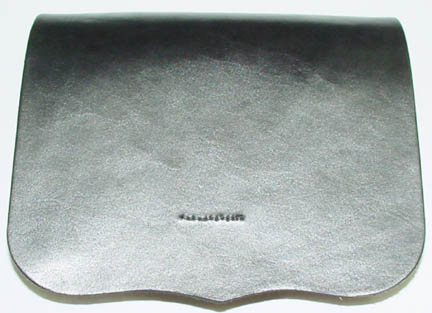
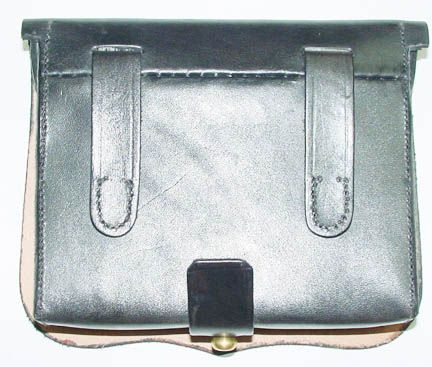
We make a representative line of Federal Government and Confederate cartridge boxes and cap pouches for the Period 1833 through 1865. These boxes are all patterned from original specimens in our collection, boxes on loan from other private collections and collections in several museums.
Our cartridge boxes and cap pouches are handmade here in our workshops. These boxes are made of oak tanned leather. All hand stitching is done in linen thread. Correct finials are turned for each box. We make the proper tins or block inserts for each box.
Please note the hand stitching done in linen thread and the careful finishing job done on these goods. This fine hand craftsmanship is done by American workers here in our workshops.
Leather Preservation Please follow this link for more information on the care and feed of leather.
To see how to put on a Cartridge box sling please follow this link.
To see how to put on a box plate please follow this link
The pattern 1841 cartridge box is a rifle or carbine box. First produced in 1839 without the implement pocket. In 1841 the implement pocket was added because of changes made in the Hall Carbine. (Ours is provided with the implement pocket) This box is designed for belt carriage only. The #297 small US Box Plate is used with this box. Used by dragoon and rifle
(Order Belt Separately)
This box is completely Hand Sewn
This box was produced as a replacement for the aging 1828 musket box (the 1808 with an embossed Eagle on the flap). This box is designed for sling carriage. Regulations state that it should carry 40 rounds of round ball or buck and ball ammunition. This box is provided with an implement pocket. The #299 US box plate is used for this box. *Double tins are included.
(Order Sling Separately)
This box is completely Hand Sewn
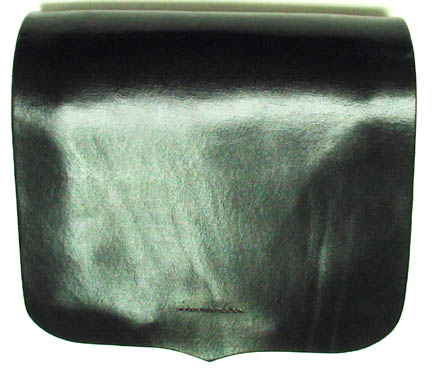
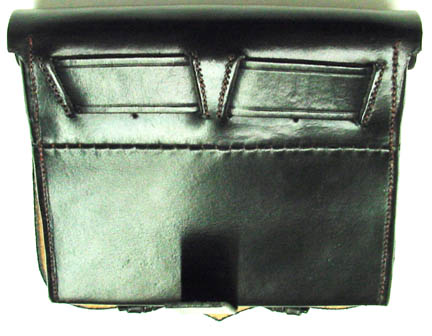
In 1857 the army made two major changes in the cartridge boxes:
1. The introduction of two new cartridge boxes: One for the new 58 caliber musket and a second for the rifled 1842 muskets .69 caliber minie (elongated ball).
2. All cartridge boxes were to be made for belt or sling carriage.
(Back straps for both belt and sling) This box comes with an implement pocket.
*Double tins are included. It uses the #BXP299 Large US Box Plate.
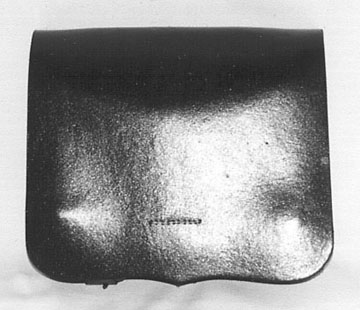
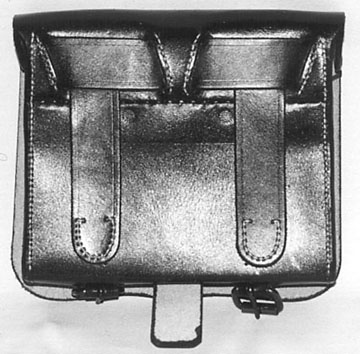
1861 Pattern Cartridge Box
Be sure to Specify Maker Marks if you have a preference.
These boxes are made up sometimes with no makers marks to make the box before July 17, 1862, the Senate passed a resolution requiring "Maker Marks" on all items contractors produced.
This version was produced from January 1, 1862 when the first contract for the new pattern was let until March 26, 1864, when the new pattern super seceded it. Many different makers for both state and federal contracts produced this box after the war broke out. Pattern of 1861cartridge box is as the 1857 pattern box with the addition of rivets in the back straps on both the .58 cal. and the .69 cal. versions. The back straps are 1 1/8 inch wide with rivets and stitching. The bottom buckles are sewn on with two rows of stitching. Inspector marks were not present on the 1861 pattern. This box comes with an implement pocket. Includes * double tins.
The #299 Large US Box Plate is used with this box.
This box is completely Hand Sewn (Order Belt or Sling Separately)
#205E 1861 Pattern Cartridge Box (a.k.a. 1855 .69 cal.
EarlyWar)
$225.00
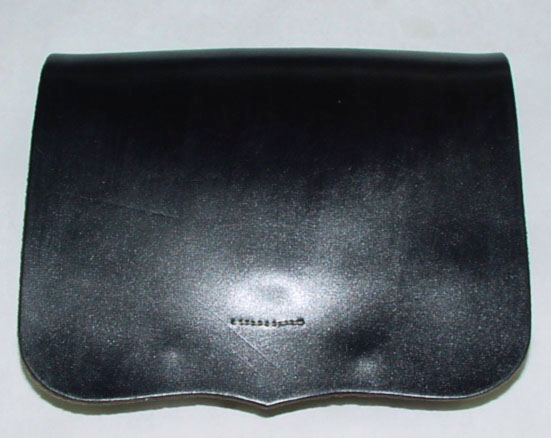
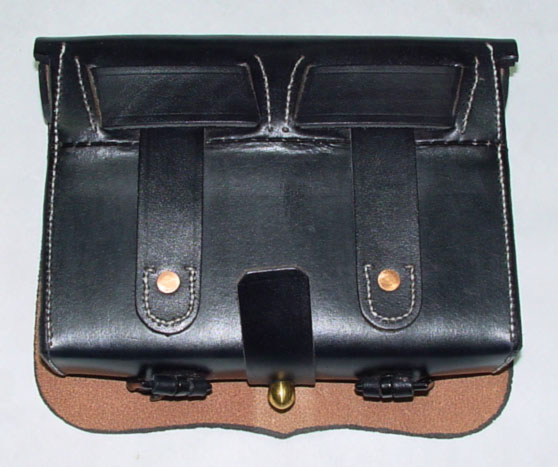
#204E 1861 Pattern Cartridge Box ( A.K.A. 1855 .58 cal. Early War) $225.00
(Used by Berdan Sharpshooters)
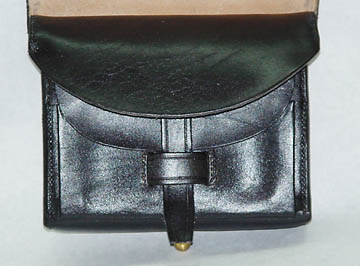
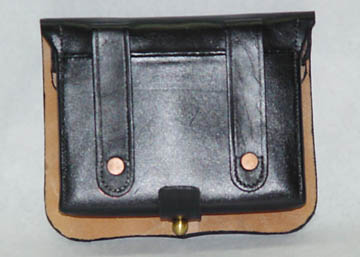
Berdan's Sharpshooters of 1862 issued this Infantry style cartridge box.Designed for belt carriage. This box uses double tins designed for a wooden block to fit into the top and bottom. The four wooden blocks were drilled with 10 holes each.
The blocks were to hold the fragile sharps cartridges. We supply the tins but we are unable to produce the wooden blocks.
#297 small"US" box plate appears to have been used with this box.
Wooden blocks are NOT included.
(Order Belt Separately)
This box is completely Hand Sewn
To see picture of the original wooden blocks click here
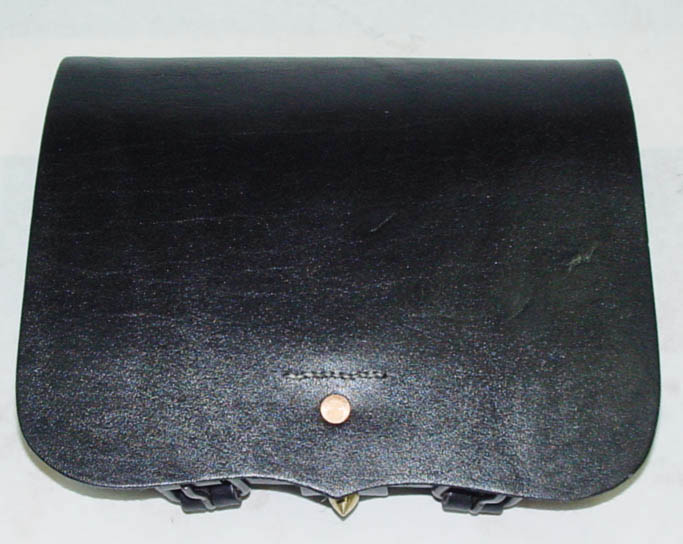
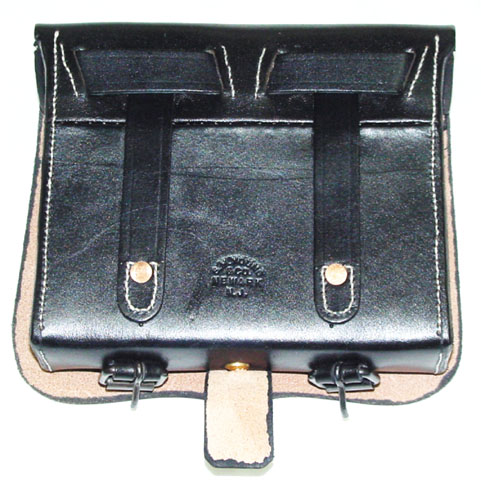
In 1864 the Ordnance Department ordered improvements to the pattern of 1861
cartridge box. The changes made in these boxes were made due to the strains of
heavy campaigning over the first three years of the Civil War. The changes
included narrowing of the back straps to 7/8" to be riveted and sewn. Rivets
were to be added to the bottom buckles and the stitch changed from a straight
stitch to a new crescent stitch. A rivet was added to the closure tap on the
front flap. This version was produced until the pattern of July 4, 1864.
Inspector marks were not present. This box comes with an implement pocket.
Includes *double tins. The #299 Large US Box Plate is used.
(Order Belt or Sling Separately)
This item is a special order item. These are not stocked.
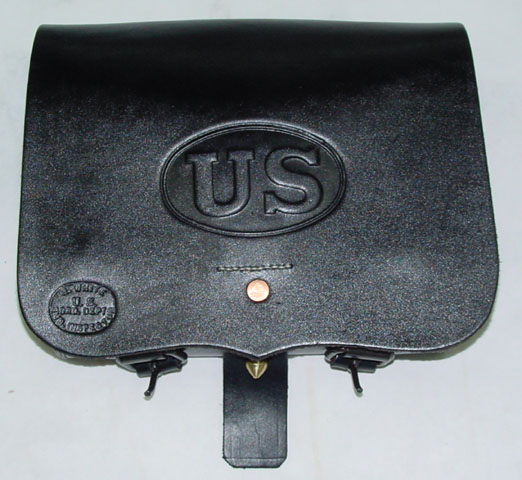
Pattern of July 4, 1864 is to be made exactly the same as the March 1864 version with the box plate dropped and the addition of the "US" embossing on the outer front flap. (This was done to save expense of box plates.) Also note
the round Eagle breast plate was no longer produced. This version was produced from July 4, 1864 to the end of the war. This is the only pattern box that had inspector marks. This box comes with an implement pocket. Includes *double
tins.
(Order Belt or Sling Separately) ("US" embossed front flap)
The pistol box is copied from an original in our collection. May be had with Gaylord maker marks upon request.
This box does not use a tin.
(Order Belt Separately)
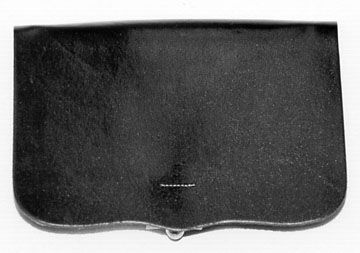
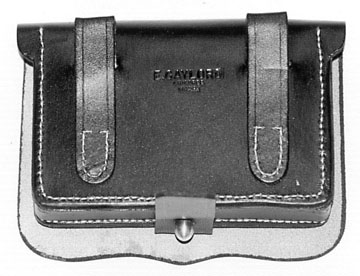
This box has a wooden block with 20 bored holes for any of the .54 caliber carbines. This box conforms to the 1857 regulations to be carried by belt or sling, but normal carriage for the box is on the belt. There is an implement pocket. The wooden block is included.
(Order Belt Separately)

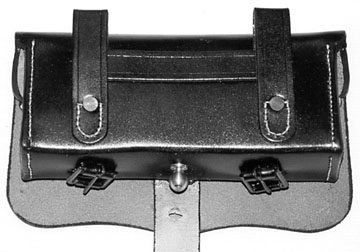
#207SM $190.00
This box was made specially for the Smith Carbine. The cartridge took a hole bored in the block a .66 dia. This block will still hold 20 rounds but the box is longer and shorter than a standard 1860 carbine. The wooden block is included.
(Order Belt Separately)


Some are selling what they call "real" buff that is a yellowish color that is very soft and spongy, but according to the Ordnance dept. of the time the leather should be of a firm consistency, and should not be Spongy. Our buff leather is specially tanned for us and very closely matches what the original buff leather was like.
Buff - is not a vegetable tanned leather. It has a loose fiber structure with grain side removed by the tanning process. This type of leather is ruff on both sides of the leather. For more information on buff check out the leather definitions.
Sept 1862 the change was made for all belts and cartridge box belts to be made of bridle leather.
We are now offering this period soap for cleaning leather. This is based off a period recipe for soap liked by harness makers. This is not like modern saddle soaps but instead is mostly made from cod oil. This type of soap will clean the leather but not be harsh enough to damage the leather. Leather items should be cleaned with soap several times a year in order to prevent the build up of dirt and other things that will damage the grain surface.
This is specially designed product to give you maximum life out of your leather items. This is the clear wax, for use on russet items. This wax contains a natural mold and mildew inhibiter, along with protection from insect damage.
This is specially designed product to give you maximum life out of your leather items. Lamp black has been added to help maintain the black color of your leather items. This wax contains a natural mold and mildew inhibiter, along with protection from insect damage.
Leather Preservation Please follow this link for more information on the care and feed of leather.
On line French & Indian,
Revolutionary Period & War of
1812
To place an order ...Click
Here!
*Check on the Status of your order
HERE.

©1997-2022pc All Rights Reserved and Owned by C&D Jarnagin Co., Inc.
